

ISO 9001:2026 Quality Management System (QMS) Certification
QMS certification and training from industry experts
ISO 14001: 2026 and ISO 9001 are here. ISO 45001 DIS coming soon.
The world’s most recognised management system standards are being updated, with new requirements, new expectations and a formal transition period on the way. These changes matter.
ISO Transition Club: It's Free to Join
Are you ready to respond? Join our Transition Club.
Turn ISO 9001: 2026 requirements into stronger business performance.
ISO 9001:2026 replaces ISO 9001:2015 and begins a new transition journey for certified organisations.
The revised standard builds on the established ISO 9001 framework, with clearer requirements, a stronger focus on leadership and quality culture, greater clarity around risks and opportunities, and closer alignment with other ISO management system standards.
Whether you are transitioning an existing Quality Management System (QMS) or working towards ISO 9001 certification for the first time, LRQA can help you understand the requirements, assess where you stand and build a system that supports consistent performance and continual improvement.
Check out the Frequently Asked Questions for information about ISO 9001 and our offerings.
To support you, we’ve launched the LRQA Transition Club, a free resource hub designed to keep you informed and prepared. Register now to stay ahead
OFFICIAL TRANSITION TIMELINE
Your ISO 9001:2026 transition journey
From publication to ISO 9001:2026 certification
ISO 9001:2026 published
The revised standard is published and the formal transition period begins.
16 SEPTEMBER 2026

Early adoption begins
Organisations ready to move early can begin transition assessments against ISO 9001:2026.
FROM PUBLICATION

New certification to ISO 9001:2015 ends
New certification activity moves to ISO 9001:2026 as the transition progresses. *Estimated March 2028
18 MONTHS AFTER PUBLICATION*

Transition window closes
Organisations certified to ISO 9001:2015 must have completed their transition to ISO 9001:2026.
30 SEPTEMBER 2029

Five steps to a successful ISO 9001:2026 transition
Understanding the changes
Review the revised requirements and understand what they mean for your QMS, people and processes.
ONE
Assess where you stand
Review your existing QMS to understand what already aligns and where changes, additional evidence or greater clarity may be needed.
TWO
Build your transition plan
Prioritise the changes you need, assign responsibilities and timings, and align transition activity with your existing management system and audit programme.
THREE
Implement changes and build capability
Put the required changes into practice and make sure leaders, quality teams and relevant process owners understand the revised requirements.
FOUR
Verify and complete your transition
Use internal audits, management review and performance data to check that changes are working, address any remaining gaps and complete your transition assessment against ISO 9001:2026.
FIVE
Ready to start your ISO 9001:2026 transition?
LRQA can help you understand the changes, assess your readiness and plan a smooth transition to ISO 9001:2026.
NEXT STEP
Start your transitionCONSIDERING A CHANGE?
Transition to the new standard with LRQA
Your ISO 9001 transition is a natural point to review your certification partner. If your certification is currently with another provider, LRQA can manage the transfer, coordinate your next audit and take care of the key dates and details. If you hold multiple standards, we can also explore bringing them together under one aligned plan.
What has changed?
ISO 9001:2026 is an evolution of the existing standard rather than a complete redesign. Its updates are intended to improve clarity, strengthen quality leadership and keep quality management aligned with the way organisations operate today.
-
Clearer requirements
Updated language and clearer requirements are designed to make the standard easier to understand and apply consistently across different organisations and sectors.
-

Greater emphasis on leadership and quality culture
The revised standard strengthens the connection between leadership, accountability and a culture that supports quality throughout the organisation.
-
Clearer treatment of risks and opportunities
ISO 9001: 2026 provides greater clarity around how organisations identify and address risks and opportunities as part of planning and decision-making.
-
New Annex A guidance
A new Annex A provides additional clarification around key concepts and their intent behind requirements, helping organisations interpret and apply the standard.
-

Closer alignment with other management system standards
The revision supports greater consistency with other ISO management systems standards, helping organisations that manage quality alongside areas such as environmental management and occupational health and safety.
Where to focus now?
Publication starts the transition, but it does not mean rebuilding your Quality Management System from the ground up. Start with the system you already have, understand where the revised requirements affect it and focus your effort where change will add value.
Get the right people involved
Make sure leadership, quality teams and relevant process owners understand that the standard has changed and what the transition means for their responsibilities.
STEP ONE
Review your existing QMS
Look at how effectively your current management system is working before making changes. Strong existing processes may already address many of the revised expectations.
STEP TWO
Compare against the new requirements
Use self-assessment or gap analysis to identify where your system already aligns and where changes, additional evidence or greater clarity may be required.
STEP THREE
Review risks and opportunities
Consider whether your existing approach reflects the clearer expectation of ISO 9001:2026 and whether risks and opportunities are being used effectively to support decision-making.
STEP FOUR
Build understanding across your organisation
Give the people responsible for implementing, maintaining and auditing your QMS the knowledge they need to work effectively with the new standard.
STEP FIVE
Plan, implement and verify
Prioritise the changes you need, assign responsibilities and build transition activity into your existing management systema and audit programme.
STEP SIX
Build your transition plan
Move from understanding to action with LRQA. We support your transition journey with a range of tools to help you understand readiness and build the capability you need.
Assess readiness
Build an initial picture of how your current QMS aligns with key areas of the revised standard and identify where further investigation may be valuable. Use your results to help focus your next steps and priorities.
Take the ISO 9001: 2026 self-assessment
Validate gaps
Get a view of your readiness. Gap analysis compares your existing management system with the revised requirements and helps you prioritise activity before your transition audit.
Explore LRQA’s Gap analysis checklist
Build capability
Understand the changes and what they mean in practice. Our ISO 9001: 2026 training helps quality professionals, auditors and wider teams build the knowledge needed to support transition.
Explore ISO 9001: 2026 training
Complete your transition
When you’re ready, our auditors can assess your Quality Management System against ISO 9001: 2026 and support your move to certification under the new edition.
Talk to us about your transition
Our ISO 9001 services
Our team of expert auditors is here to be your partner on every aspect of the journey to ISO 9001 certification. They can help you demonstrate your commitment to best practice through globally recognised quality management system certification, and, establish credibility and reliability in your market.
Certification
Demonstrate your commitment to quality and continual improvement with independent certification recognised around the world. Build confidence in performance and demonstrate recognised assurance to customers, stakeholders and supply-chain partners.
Training
Our ISO 9001 training courses build the knowledge and capability of your teams. From foundation-level understanding to internal auditor training and implementation workshops, to standard revision courses, we help you embed quality at every level of your organisation.
Gap analysis
Get clarity on where you stand. Our gap analysis service compares your current system against ISO 9001 requirements, helping you prioritise actions and prepare confidently for certification or recertification.

Integrated audits
ISO 9001 quality management system can be audited alone or as part of an integrated system alongside standards like ISO 14001 or ISO 45001. We help you streamline audits, align objectives and manage multiple risks through a single, connected framework.
Managing More Than ISO 9001?
If you also hold ISO 14001, ISO 45001 or other certifications, transition is a useful time to consider whether your management systems could work better together. An integrated approach can reduce duplication, align shared processes and make audit activity easier to coordinate.
Explore integrated management systems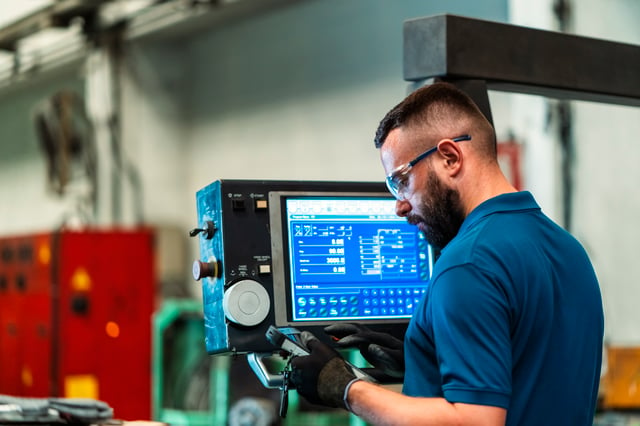
Why ISO 9001 Certification?
ISO 9001 certification demonstrates that your organisation has established a consistent, high-quality approach to delivering products and services. It codifies your best practices into documented processes, ensuring every team follows the same standards and reducing errors and rework. Certification also signals to customers, regulators, and partners that your quality management system has been independently audited against a globally recognised benchmark. In industries where suppliers must hold ISO 9001 approval to bid, having the certificate opens doors to new contracts and markets.
What Are the Benefits of ISO 9001 Certification?
- Operational Consistency - Achieving ISO 9001 means codifying your best practices into clear procedures and work instructions. When every team member follows the same documented steps, you eliminate sporadic corrections that introduce errors. Consistency in processes also makes onboarding new staff faster and training more effective, as everyone refers to the same quality benchmarks.
- Improved Efficiency and Business Performance - ISO 9001’s requirement for regular internal audits and management reviews shines a spotlight on inefficiencies - whether it’s redundant approvals, hand-off delays, or underused assets. By acting on these insights, you refine workflows, optimise resource allocation, and drive down operational costs. The result is a leaner operation that consistently hits performance targets and contributes measurable gains to your bottom line.
- Enhanced Customer Confidence - Certification provides third-party validation that your quality controls are reliable. Customers know that an independent auditor has reviewed your processes, records, and corrective-action logs. This transparency fosters trust, leading to higher satisfaction rates, more repeat business, and a reputation for dependable delivery.
- Market Access and Competitive Advantage - Many companies require suppliers and partners to have independent certification to ISO 9001 as a license to tender. And while certification isn’t always a contractual obligation, it will often provide competitive advantage and added credibility, helping to win and maintain trusted business relationships.
- Continuous Improvement Culture - ISO 9001 is not a one-time project; it embeds a cycle of internal audits, management reviews, and corrective actions into your routine. Every audit uncovers opportunities for refinement, ensuring that processes evolve in response to new risks, technologies, and market demands. This structured approach makes continual improvement part of your organisational DNA.
- Integrated Management Systems - ISO 9001 follows the Annex SL framework, the high-level structure for modern ISO Standards. The Annex SL structure ensures consistency and compatibility between the different management system standards and allows for a straightforward and harmonised implementation of multiple standards (integrated management system). ISO 9001 easily integrates with all new and revised ISO management system standards, such as ISO 14001, ISO 45001, and ISO 27001.
- Risk Mitigation - ISO 9001 builds risk mitigation into your quality management by requiring regular risk and opportunity assessments. You identify potential issues like supply chain interruptions or equipment failures and establish preventive controls such as backup suppliers, process checkpoints and targeted training. Continuous monitoring of performance metrics and non-conformity reports then ensures these measures evolve, reducing costly disruptions and reinforcing operational resilience.
ISO 9001:2026 – What’s Changing and How to Prepare
A formal revision of ISO 9001 is in progress, with updated requirements expected in late 2026. These changes may impact how your QMS is implemented, audited, and maintained. LRQA offers early access to briefings, training, and expert guidance to help you plan a smooth transition well ahead of the formal deadline.
Why work with us?
Global reach, local support
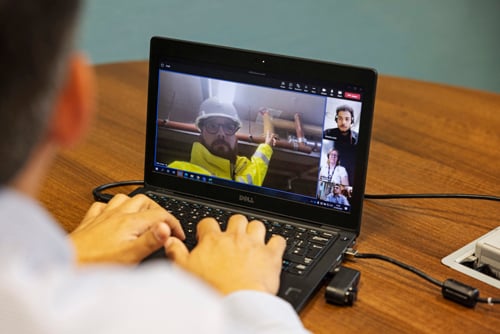
With clients in over 150 countries and auditors on the ground wherever you operate, we deliver consistent quality and responsive support worldwide, both in person and remotely.

A connected approach to risk
ISO 9001 is a powerful foundation for managing quality and driving improvement. At LRQA, we help you build on that foundation by connecting it with wider business risks, from safety and sustainability to cyber and supply chain, giving you a clearer, more complete view of performance and resilience.
Decades of expertise
LRQA was the first to achieve UKAS accreditation to deliver certification services across multiple standards worldwide. With decades of sector-specific experience, our auditors tailor every audit to your industry, operations and goals.

Focused on you
Our approach is always tailored to your goals. Whether you’re aiming to meet client expectations, access new markets, improve efficiency or support growth, we help you get there, with risk management solutions you can trust.

LRQA’s ISO 9001 Certification Process
Navigating ISO 9001 certification involves a structured, five-stage journey from initial gap analysis to ongoing surveillance audits designed to ensure your quality management system meets global standards.
Gap Analysis & Preparation
Begin by mapping your existing quality procedures against the ISO 9001 requirements. This gap analysis highlights areas where your documentation, work instructions, or quality records fall short. Armed with this insight, you create a targeted action plan—updating procedures, assigning responsibilities, and training staff to close any compliance gaps.
Implementation & Internal Review
With improvements in place, roll out the revised processes across your teams. Conduct a full internal audit (or mock assessment) to test the effectiveness of your Quality Management System. This exercise verifies that employees understand the new procedures and that records—such as audit logs and corrective-action reports—are accurately maintained.
Stage 1 Audit (Documentation Review)
Submit your QMS documentation for remote review by the certification body. Auditors will examine your quality manual, process maps, and records to ensure they align with ISO 9001’s clauses. Any minor non-conformities identified at this stage can be resolved quickly to prepare for the main evaluation.
Stage 2 Audit (Implementation Evaluation)
During the on-site or remote implementation audit, auditors observe your processes in action. They interview personnel, inspect records, and verify that documented procedures are followed in practice. Address any findings promptly to demonstrate your commitment to meeting the standard’s requirements.
Certification & Ongoing Surveillance
Upon successful completion of both audit stages, you receive your ISO 9001 certificate, valid for three years. To maintain certification, you undergo annual surveillance audits that confirm your QMS remains effective and compliant. These recurring reviews also generate fresh insights for further efficiency gains and risk mitigation.
Join the ISO Transition Club
The LRQA Transition Club brings together our latest ISO 9001:2026 guidance and resources so you can keep up with the transition and understand what to do next.

Expert guidance on ISO 9001:2026

Practical guides, FAQs and explainers

Self-assessment and gap analysis resources

Transition planning support

Webinars and training

New resources throughout the transition period
Would you like to know more about ISO 9001 certification?
ISO 9001 Certification - Frequently Asked Questions
What is the meaning of ISO 9001?
Designed for organisations of any size and operating in any sector, ISO 9001 is an international management system standard that provides a recognised framework for quality management and continuous improvement. Over 1 million companies worldwide use ISO 9001 to better understand and meet their client and stakeholder needs and drive performance. ISO 9001: 2026 is the latest published edition of the standard.
How are ISO audits conducted?
Our services blend remote and on-site audit activities to provide unrivalled insight and expertise while offering greater flexibility around your audit programme.
Using secure, remote technology, we can provide a fast and flexible way to maintain your audit schedule, help reduce carbon footprint associated with travel, and minimise health and safety risks for people working on hazardous sites or hard-to-reach areas. Outcomes are consistent with on-site audits, so the integrity of your audit and accredited certification remains exactly the same.
How long is my ISO certificate valid for?
Certificates are valid for 3 years from the date of completing the initial certification process. The certification renewal audit is discussed and planned by the auditor well in advance of the expiration to ensure that the ISO certification continues.
How much does it cost to get ISO 9001 certified?
Certification costs will depend on the size and complexity of your organisation and the maturity of its existing management system. To get a bespoke quote, please fill in the form below and one of our team members will get in touch with all the details you need.
What are the 10 clauses of ISO 9001?
ISO 9001 follows the Annex SL framework and consists of the following 10 clauses:
- Clauses 0 to 3: Introduction, Scope, References, Terms and Definitions
- Clause 4: Context of the organization
- Clause 5: Leadership and commitment
- Clause 6: Planning for the QMS
- Clause 7: Support & resource management
- Clause 8: Operational planning and control
- Clause 9: Performance evaluation
- Clause 10: Improvement actions
How to get ISO 9001 Certification?
- Understand the standard: Review ISO 9001 requirements and how they apply to your business.
- Conduct a gap analysis: Compare current processes with the standard to identify improvements needed.
- Implement changes: Update procedures, train staff, and strengthen your quality management system (QMS).
- Internal audit: Test the effectiveness of your QMS before the external audit.
- Certification audit: Undergo Stage 1 (document review) and Stage 2 (implementation evaluation) audits by an accredited body.
- Maintain certification: Certification is valid for three years, with annual surveillance audits to ensure ongoing compliance.
What is the difference between ISO 9001 and ISO 14001?
ISO 9001 quality management system (QMS) is the globally recognised management system standard which provides a framework for quality management.
ISO 14001 certification is the globally recognised management system standard for environmental management. Like ISO 9001, ISO 14001 provides a framework and continuous improvement for a business’s environmental management system (EMS) and is modelled on the Annex SL framework.
How can I prepare for the ISO 9001:2026 transition?
Start your transition now by:
- Reviewing Risk Assessments - Update your current risk-and-opportunity registers to include digital and supply-chain vulnerabilities.
- Engaging Leadership - Hold strategy workshops to define sustainability and ethical targets, and document how top management will measure and report on these objectives.
- Training & Briefings - Enroll key staff in targeted transition courses such as awareness briefings and implementation workshops to embed the new requirements before the deadline.
CASE STUDIES
-
McDonald's and LRQA - turning food safety risk into...

Case Study Page
For over 25 years, McDonald’s has partnered with LRQA, beginning with supplier audits and evolving into a comprehensive,...
Read more -
Repsol ISO 14067 carbon footprint case study

Case Study Page
Discover how Repsol’s multidisciplinary team worked together to calculate the carbon footprint of High Purity Liquefied Gases (HPLGs),...
Read more -
Thrust Carbon ISO 14083 Verification Case study

Case Study Page
Award-winning green tech start-up, Thrust Carbon, explains what it means to be among the first organisations to have...
Read more -
Trelleborg Marine Engineering - ISO 50001 certification case study

Case Study Page
Read more on how Trelleborg Marine Engineering (Qingdao) Co Ltd improved energy management and reduced emissions with ISO...
Read more -
BAE Systems: Elevating operational excellence and employee well-being

Case Study Page
Discover BAE Systems Rochester's dedication to operational excellence as they partner with LRQA for ISO 45001 certification and...
Read more -
Case Study: Hill International gets certified for ISO 19650...

Case Study Page
Explore our case study on Hill International's successful BIM certification journey, showcasing the benefits and efficiency gains of...
Read more
Latest news, insights and upcoming events
-
Scaling Supply Chain Impact | Dr Siva Pariti

Article
Dr Siva Pariti shares insights on improving supply chain impact through integrated approaches to carbon, chemicals and water,...
Read more -
AI Penetration Testing for ISO 42001 Compliance

Article
ISO/IEC 42001 sets the framework for responsible AI management, but documentation alone does not prove your controls work....
Read more -
The quality mindset: Connecting risk, culture and performance to...

Article
In celebration of World Quality Week, LRQA’s latest Future in Focus podcast brings together two of our leading...
Read more -
ISO 9001:2026 is live: the transition period has begun...

News
ISO 9001:2026 has been published, starting the three-year transition period. Whoever your certification body is, take the first...
Read more -
ISO 9001 revision update: Publication date confirmed
News
The publication date for ISO 9001:2026 has been confirmed as 16 September 2026, marking the start of the...
Read more -
Integrated vs Consolidated Management Systems: Why the difference matters

News
Learn the difference between integrated and consolidated management systems, when each approach works best, and how organisations can...
Read more -
LRQA achieves UKAS accreditation for ISO 42001, strengthening assurance...

News
LRQA has achieved UKAS accreditation for ISO/IEC 42001, enabling accredited certification for AI management systems. This strengthens assurance...
Read more -
IATF 16949 update: aftermarket replacement parts now in scope

News
New IATF scheme interpretations confirm eligibility for aftermarket replacement parts and require their inclusion in scope for mixed...
Read more -
ISO 9001 revision update: DIS now published

News
On 27 August 2025, the Draft International Standard (DIS) of ISO 9001 was officially published, marking a major...
Read more