

ISO 9001 FAQs
What is the meaning of ISO 9001?
Designed for organisations of any size and operating in any sector, ISO 9001 is an international management system standard that provides a recognised framework for quality management and continuous improvement. Over 1 million companies worldwide use ISO 9001 to better understand and meet their client and stakeholder needs and drive performance. ISO 9001: 2026 is the latest published edition of the standard.
What are the benefits of ISO 9001 certification?
Competitive advantage
Many companies require suppliers and partners to have independent certification to ISO 9001 as a licence to tender. And while certification isn’t always a contractual obligation, it will often provide competitive advantage and added credibility, helping to win and maintain trusted business relationships.
Business effectiveness and performance
By following the best practice principles found in ISO 9001, organisations can improve their approach to risk management, provide a clear understanding of the internal and external context of their organisation and make a valuable contribution to overall business effectiveness and performance. Accredited certification through a globally trusted and recognised provider such as LRQA is a badge of credibility and professionalism for organisations around the world.
Easy integration
ISO 9001 follows the Annex SL framework, the high-level structure for modern ISO Standards. The Annex SL structure ensures consistency and compatibility between the different management system standards and allows for a straightforward and harmonised implementation of multiple standards (integrated management system). ISO 9001 easily integrates with all new and revised ISO management system standards, such as ISO 14001, ISO 45001, and ISO 27001.
How do I get ISO 9001 certification?
The path that your organisation takes to achieve ISO 9001 certification often depends on your business's size, maturity, and existing approach to managing risk, amongst other factors. The standard process to becoming ISO 9001 certified includes three main steps.
- Stage 1 Audit – document review and planning: Your auditor will review the design and documentation of your management system – in most cases, this is carried out remotely.
- Stage 2 Audit – evaluating your implementation: Your auditor will evaluate the implementation and effectiveness of your existing QMS in line with the requirements of ISO 9001. If there are no non-conformities, you’ll receive your certification. This stage can be carried out remotely or on-site.
- Promote your ISO 9001 certification: Your certification demonstrates a commitment to internationally recognised best practices and continual improvement – helping you win new business and meet stakeholder demands.
How are ISO audits conducted?
Our services blend remote and on-site audit activities to provide unrivalled insight and expertise while offering greater flexibility around your audit programme.
Using secure, remote technology, we can provide a fast and flexible way to maintain your audit schedule, help reduce carbon footprint associated with travel, and minimise health and safety risks for people working on hazardous sites or hard-to-reach areas. Outcomes are consistent with on-site audits, so the integrity of your audit and accredited certification remains exactly the same.
How long is my ISO certificate valid for?
Certificates are valid for 3 years from the date of completing the initial certification process. The certification renewal audit is discussed and planned by the auditor well in advance of the expiration to ensure that the ISO certification continues.
How much does it cost to get ISO 9001 certified?
Certification costs will depend on the size and complexity of your organisation and the maturity of its existing management system. To get a bespoke quote, please fill in the form below and one of our team members will get in touch with all the details you need.
What are the 10 clauses of ISO 9001?
ISO 9001 follows the Annex SL framework and consists of the following 10 clauses:
- Clauses 0 to 3: Introduction, Scope, References, Terms and Definitions
- Clause 4: Context of the organization
- Clause 5: Leadership and commitment
- Clause 6: Planning for the QMS
- Clause 7: Support & resource management
- Clause 8: Operational planning and control
- Clause 9: Performance evaluation
- Clause 10: Improvement actions
What is the difference between ISO 9001 and ISO 14001?
ISO 9001 quality management system (QMS) is the globally recognised management system standard which provides a framework for quality management.
ISO 14001 certification is the globally recognised management system standard for environmental management. Like ISO 9001, ISO 14001 provides a framework and continuous improvement for a business’s environmental management system (EMS) and is modelled on the Annex SL framework.
What’s happening with the ISO 9001 revision and how can I prepare?
ISO 9001 has undergone a formal revision, with the final version of the updated standard published on 16th September 2026. Organisations have a three-year transition period to update their quality management systems in line with the new requirements.
To help you stay ahead, we’ve launched the LRQA Transition Club, a free hub of resources, expert insight, practical guidance and training to support your journey through the changes.
What is the difference between ISO 9001:2015 and ISO 9001: 2026?
ISO 9001:2026 replaces ISO 9001:2015 and updates the standard to reflect current approaches to quality management.
The overall Quality Management System framework remains familiar, so organisations already certified to ISO 9001:2015 will not necessarily need to rebuild their QMS. Instead, they should review the revised requirements, understand where they differ from the 2015 edition and identify any changes needed within their existing system.
Our ISO 9001:2026 What's Changed guide provides an overview of the updates and practical considerations for transition.
Do I need to transition from ISO 9001: 2015 to ISO 9001: 2026?
Yes. If your organisation is currently certified to ISO 9001:2015 and wants to maintain its accredited ISO 9001 certification, you will need to transition to ISO 9001:2026 within the applicable transition period.
Transition does not mean starting your Quality Management System again. Begin by understanding the revised requirements and assessing how your existing QMS aligns with them. This will help you identify what already meets the new requirements and where further action may be needed.

ISO 9001 training
Build practical knowledge of ISO 9001 with LRQA training courses designed to support understanding, implementation and audit preparation at every stage.
Explore ISO 9001 training courses
ISO 9001 resources
Access practical ISO 9001 resources from LRQA to support understanding, implementation and audit preparation throughout your quality journey.
Download ISO 9001 resourcesCase studies
-
KSB SAS: Strengthening Nuclear Safety Culture with ISO 19443

Case Study
Learn how KSB SAS partnered with LRQA to strengthen its nuclear safety culture and ensure compliance. Explore their...
Read more -
Serco's Journey with LRQA: Strengthening Business Resilience

Case Study
Learn how Serco partnered with LRQA to strengthen resilience, optimise operations, and ensure compliance. Explore their journey and...
Read more -
EHS Achieves ISO 42001 AI Management System Certification with...

Case Study
Emirates Health Services becomes the first to achieve ISO 42001 AI Management System certification with LRQA, emphasizing AI...
Read more -
Neo Tangent receives ISO 9001 and ISO 27001 certifications...
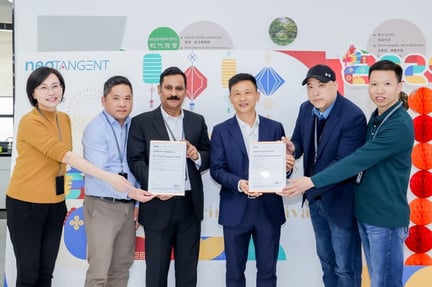
Case Study
Neo Tangent Limited, a leading Global Business Services (GBS) company recently achieved a significant milestone of two ISO...
Read more -
Shell: 3D printing quality assurance case study
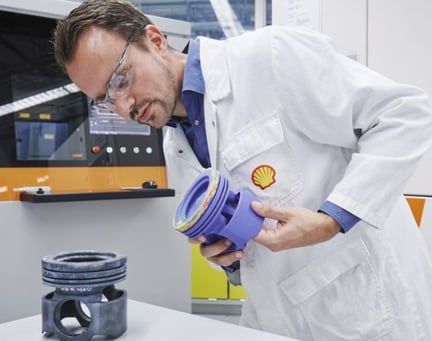
Case Study
LRQA is supporting Shell with assurance solutions for safety-critical 3D printed parts, driving trust and innovation in additive...
Read more -
Delivering ISO 45001 certification to DP World

Case Study
LRQA audited DP World, UAE Region – a large matrix business – across a wide range of assets...
Read more