
Sustainable development and emission reductions.
Periodic review and ex post determination of the monitored greenhouse gas (GHG) emissions reductions determines and certifies the amount of emission reduction credits earned.
CLEAN DEVELOPMENT MECHANISM (CDM)
Overview
CDM validation is the independent evaluation of a project activity against the requirements of CDM. It is based on the project's design documentation, in particular the project's baseline, monitoring plan and compliance with relevant UNFCCC and host party criteria, to establish whether tradable credits are generated. In order to register for this scheme, all CDM projects must undergo a validation.
CDM verification is the periodic review and ex post determination of the monitored greenhouse gas (GHG) emissions reductions that have occurred as a result of a registered CDM project activity. A successful verification determines and certifies the amount of emission reduction credits earned. Certification is the written assurance that a project activity achieved the emission reductions as verified. The CDM Executive Board (CDM EB) then issues these credits.
What are the benefits?
- It will establish the integrity of your project design document, monitoring plan and all supporting assumptions, etc (validation).
- It will establish the integrity of your system(s) and processes for monitoring and reporting emissions from the project and the emissions reduction data (verification).
- It provides the UNFCCC with confirmation of your conformance with CDM decisions, procedures and methodologies.
- It provides you with our validation report which allows you to register the project and our certficate which allows you to receive certified emission reductions (CER).
Need help with CDM?
Companies in industrialised countries wishing to invest in eligible, cost-efficient GHG reduction projects in developing countries to offset their own reduction commitments or trade excess CERs.
Why choose LRQA?
We offer validation of the project's documentation against the requirements of CDM allowing you to register your project.
Periodic verifications confirm that your project operations are installed/implemented as planned, that the monitoring systems are in place, are fully functional and are compliant with those described in the monitoring and reporting plan, and that verifiable emission reductions can be expected to be generated. A periodic verification will determine whether the GHG emissions reduction data is 'free' from misstatements and that sufficient documentary evidence supports this reported data. We also certify that you achieved your GHG emissions reductions as verified, letting the CDM EB issue the CERs which you can then trade. We will make flexible arrangements with all parties involved to make sure your project design documents and other key documents are independently validated and your actual emission reductions are verified against scheme requirements.
Want to know more about this service?
CASE STUDIES
-
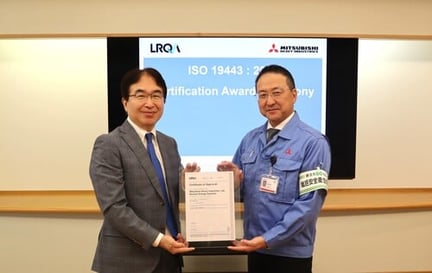
LRQA Awards ISO 19443 Certification to MHI
Case Study
Learn how LRQA awarded ISO 19443 certification to Mitsubishi Heavy Industries (MHI), marking a significant milestone in nuclear...
Read more -
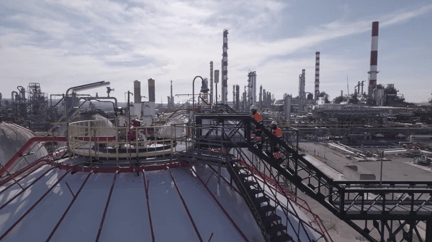
Repsol ISO 14067 carbon footprint case study
Case Study
Discover how Repsol’s multidisciplinary team worked together to calculate the carbon footprint of High Purity Liquefied Gases (HPLGs),...
Read more -
Delivering huge boilers smartly
Case Study
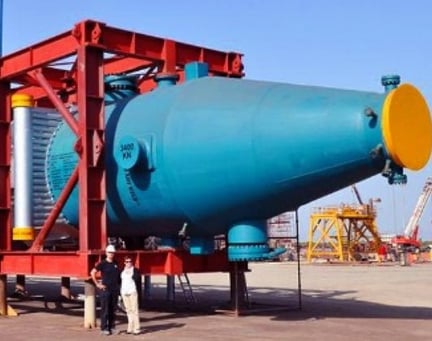
Certification and inspection of colossal heat recovery boilers using Larsen & Toubro’s latest fabrication techniques. Read more in...
Read more -
Training for Huadian Heavy Industries
Case Study
Designing and delivering bespoke training with the RES Group for a leading Chinese EPC contractor. Read more in...
Read more -
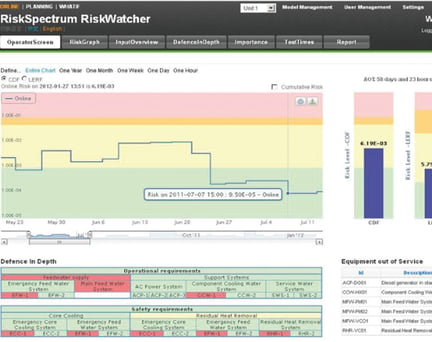
Risk monitoring for EDF Energy
Case Study
Seeing the full risk picture at Sizewell B. Integrated consultancy, advisory and software support for risk monitoring. Read...
Read more -
Thales UK: Seeing what’s on the environmental horizon...
Case Study
Seeing what’s on the environmental horizon and acting. Gap analysis to help meet revised standard, ISO 14001:2015. Read...
Read more -
Putting the environment on a region’s daily agenda
Case Study
Putting the environment on a region’s daily agenda. Certification to revised environmental standard, ISO 14001:2015. Read more in...
Read more -
Windflow: Novel wind turbines
Case Study
Type approval to international standards of Windflow’s two-bladed turbines, and review and auditing of manufacturing sites. Read more...
Read more -
Providing Engineering Support to the SCHOTTEL Hydro Triton Tidal...
Case Study
Taking designs further to harness tidal power, Bay of Fundy. Structural analysis, design codes and standards review. Read...
Read more



INSIGHTS
-
Climate ambition isn’t enough: the rise of evidence-led decarbonisation...
Article
Supply chain decarbonisation is entering a new phase. LRQA’s Risk Outlook 2026 shows why the challenge is no...
Read more -
The importance of the right risk management partner

Article
Risk has become a sharper instrument in today’s operating environment, increasingly visible, connected and unforgiving of complacency.
Read more -
Moving forward after COP30: Driving transparency in clean transport

Article
Clear rules, better data and credible assurance are now essential for turning transport’s climate ambition into real progress...
Read more