

ISO 50001 Energy Management Systems
Pursue sustainability goals with energy management certification
Improve energy efficiency with energy management system certification
A robust approach that unlocks long-term efficiency gains. ISO 50001 is the international standard for Energy Management Systems (EnMS) that has been designed to help organisations build a systematic approach to energy performance. Gaining the ISO 50001 certification from LRQA demonstrates your commitment to sustainable energy practices and compliance with local energy regulations, and is the key to cost savings further down the line.
Our ISO 50001 services
Our flexible certification and training services can be delivered on-site, remotely, or as a blend of both—enabling you to fit them around the needs of your business.
Training
Grow your knowledge of ISO 50001 with training courses that are designed to match your experience level and personal development goals.

Gap Analysis
Put your existing EnMS to the test and discover areas that need attention and improvement prior to undertaking your ISO 50001 audit.

Certification
A two-phase process that first validates your EnMS according to ISO 50001 and then assesses the effectiveness of it in meeting the standard, resulting in accredited certification.

Integrated Audit
Save time and money through an integrated audit and assessment program that covers all of your management systems holistically.
What is ISO 50001?
ISO 50001:2018 specifies requirements for establishing, implementing, maintaining and continually improving an Energy Management System.
The standard enables organisations to:
- Develop an energy policy
- Conduct an energy review
- Identify significant energy uses (SEUs)
- Establish energy performance indicators (EnPIs)
- Set measurable energy objectives and targets
- Monitor and analyse energy data
- Drive continual improvement of energy performance
ISO 50001 follows the High-Level Structure (HLS) common to ISO management system standards, allowing integration with ISO 9001, ISO 14001 and other management systems.
Benefits of ISO 50001 Certification
Implementing and certifying an Energy Management System according to ISO 50001 can help organisations:
- Improve energy performance through systematic management
- Identify opportunities to reduce energy use and related costs
- Strengthen governance and accountability for energy management
- Support identification and management of applicable legal and other requirements
- Enhance credibility with customers, investors and regulators
- Contribute to sustainability and climate objectives
ISO 50001 does not guarantee specific energy savings. However, it provides a structured framework to support measurable and continual improvement in energy performance.
Why work with us?
Global capability
With a global network of qualified auditors, we operate everywhere you do, enabling us to provide you a local service with a consistent approach and dedication to excellence. Our people are subject matter experts with in-depth knowledge of energy management.

Flexible delivery
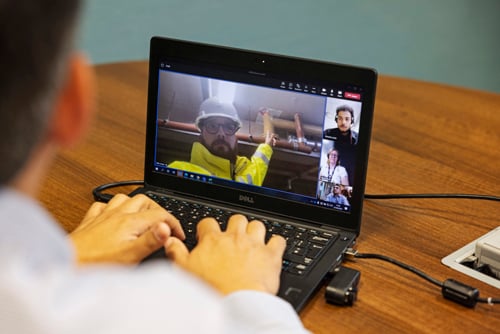
Our ISO 50001 training and certification services can be delivered on-site or remotely using secure and reliable technology. Regardless of which you choose, we deliver the same high-quality service and dependable results with the added benefits of flexibility, fast delivery, and access to global expertise with our remote service.
History of firsts
LRQA was the first organisation to receive UKAS accreditation to deliver certification for a wide range of standards globally. Today, we lead the way in the development of standards and frameworks across a variety of sectors.

Total assurance
Our service doesn’t stop at compliance. LRQA experts are true specialists who work to add value through an effective and robust audit of your system and by making appropriate recommendations to improve it and your business at the same time.

ISO 50001 Certification Process
The ISO 50001 certification process follows internationally recognised auditing principles and typically includes:
1. Preparation and Energy Review
The organisation establishes the scope of its Energy Management System and conducts an energy review to analyse energy use and consumption. This includes identifying significant energy uses (SEUs), evaluating influencing factors and defining relevant energy performance indicators (EnPIs).
2. System Implementation
Policies, procedures and controls are implemented to manage energy performance. Objectives and targets are defined, and monitoring and measurement processes are established.
3. Certification Audit (Stage 1 and Stage 2)
An accredited certification body conducts a two-stage audit:
· Stage 1: Review of documented information and system readiness
· Stage 2: On-site assessment of implementation and effectiveness
4. Certification and Ongoing Surveillance
If conformity is demonstrated, certification is granted. ISO 50001 certification typically follows a three-year cycle, with surveillance audits conducted at least annually and a recertification audit prior to certificate expiry.
For more detailed guidance on how to implement the standard, you can consult our ISO 50001 Implementation Guide.
Continual Improvement of Energy Performance
A central requirement of ISO 50001 is the continual improvement of energy performance. Organisations are required to evaluate performance against established energy baselines and energy performance indicators, take corrective actions where necessary and regularly review the effectiveness of the Energy Management System.
This structured approach supports long-term energy optimisation and strengthens organisational resilience in an evolving regulatory and market environment.
Frequently Asked Questions About ISO 50001
Who should implement ISO 50001?
ISO 50001 is suitable for organisations of any size or sector that use energy as part of their operations. It is particularly relevant for energy-intensive industries, manufacturing, infrastructure operators, data centres, healthcare facilities and large commercial buildings.
What are the main requirements of ISO 50001?
Key requirements include establishing an energy policy, conducting an energy review, identifying significant energy uses, defining energy performance indicators, setting measurable objectives and targets, monitoring results and driving continual improvement through management review and internal audits.
How long does ISO 50001 certification take?
The duration of ISO 50001 certification depends on factors such as the size and complexity of the organisation, the number of sites included in the scope, the scale of energy use, and the maturity of the Energy Management System.
The certification process typically includes system preparation, a Stage 1 audit (readiness review), a Stage 2 audit (implementation assessment), and corrective actions where required. The overall timeline is agreed based on the defined scope and organisational context.
Why choose LRQA for ISO 50001 certification?
LRQA provides accredited ISO 50001 certification delivered by experienced auditors with sector-specific expertise. Our structured audit approach focuses on clarity, risk awareness and long-term system effectiveness.
We work with organisations across a wide range of industries to support credible, transparent and internationally aligned Energy Management Systems. Our certification services are designed to add value while maintaining full conformity with ISO 50001 requirements and applicable accreditation rules.
Does ISO 50001 guarantee energy cost savings?
No. ISO 50001 provides a management framework designed to help organisations improve energy performance. While many organisations achieve energy savings, the standard itself does not guarantee specific financial outcomes.
How long is ISO 50001 certification valid?
ISO 50001 certification typically follows a three-year cycle. Surveillance audits are conducted at least annually, and a recertification audit is required before the certificate expires.
What is the difference between ISO 50001 and ISO 14001?
ISO 14001 focuses on environmental management systems across a broad range of environmental aspects. ISO 50001 focuses specifically on managing and improving energy performance.
Both standards can be integrated within a single management system due to their aligned structure.
Are you already certified to ISO 50001 and would like to transfer?
If you hold a valid accredited certificate of approval with another provider and you are considering moving, transferring your ISO 50001 certification to LRQA is simple. We'll work with you to ensure your transfer is as smooth as possible.
CASE STUDIES
-
Repsol ISO 14067 carbon footprint case study
Case Study Page
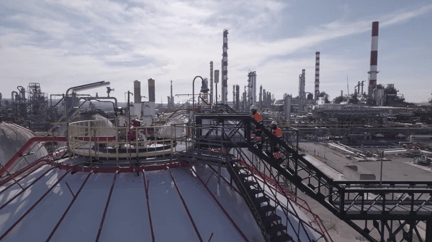
Discover how Repsol’s multidisciplinary team worked together to calculate the carbon footprint of High Purity Liquefied Gases (HPLGs),...
Read more -
Helping NGO, Terre de Hommes, help children globally....
Case Study Page
Helping Terre de Hommes help children globally. Certification to ISO 9001:2015 redesigns the NGO’s operating structure. Read more...
Read more -
Delivering huge boilers smartly
Case Study Page
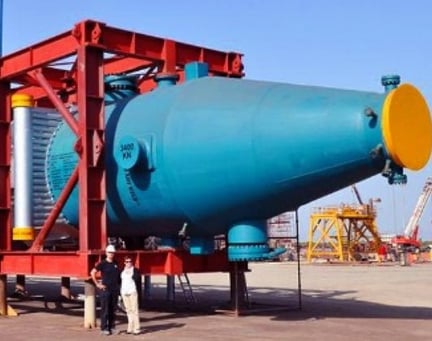
Certification and inspection of colossal heat recovery boilers using Larsen & Toubro’s latest fabrication techniques. Read more in...
Read more -
Training for Huadian Heavy Industries
Case Study Page
Designing and delivering bespoke training with the RES Group for a leading Chinese EPC contractor. Read more in...
Read more -
Risk monitoring for EDF Energy
Case Study Page
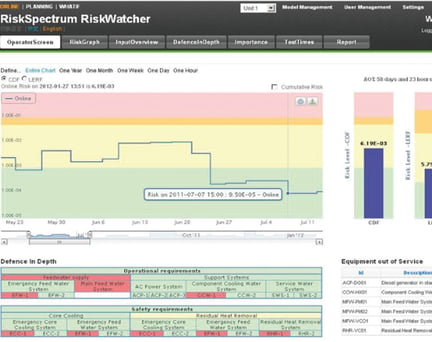
Seeing the full risk picture at Sizewell B. Integrated consultancy, advisory and software support for risk monitoring. Read...
Read more -
Thales UK: Seeing what’s on the environmental horizon...
Case Study Page
Seeing what’s on the environmental horizon and acting. Gap analysis to help meet revised standard, ISO 14001:2015. Read...
Read more -
Putting the environment on a region’s daily agenda
Case Study Page
Putting the environment on a region’s daily agenda. Certification to revised environmental standard, ISO 14001:2015. Read more in...
Read more -
Providing Engineering Support to the SCHOTTEL Hydro Triton Tidal...
Case Study Page
Taking designs further to harness tidal power, Bay of Fundy. Structural analysis, design codes and standards review. Read...
Read more -
Case study: Moving novel wave energy technology closer to...
Case Study Page
Turning ocean waves into electricity with independent certification and Technology Qualification. Read our WaveRollerTM case study.
Read more





Latest news, insights and upcoming events
-
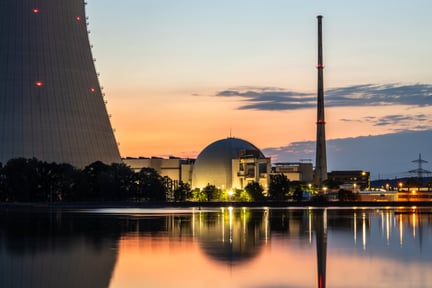
Nuclear and energy security in the Middle East
Article
Explore how nuclear energy is reshaping energy security in the Middle East, driven by rising demand, geopolitical pressure...
Read more -
Scaling Supply Chain Impact | Dr Siva Pariti

Article
Dr Siva Pariti shares insights on improving supply chain impact through integrated approaches to carbon, chemicals and water,...
Read more -
AI Penetration Testing for ISO 42001 Compliance

Article
ISO/IEC 42001 sets the framework for responsible AI management, but documentation alone does not prove your controls work....
Read more -
The quality mindset: Connecting risk, culture and performance to...

Article
In celebration of World Quality Week, LRQA’s latest Future in Focus podcast brings together two of our leading...
Read more -
How risk-led strategies are driving energy transition progress

Article
Discover how leading energy organisations are turning net zero ambition into momentum. Learn why risk-led assurance is key...
Read more -
Integrated vs Consolidated Management Systems: Why the difference matters

News
Learn the difference between integrated and consolidated management systems, when each approach works best, and how organisations can...
Read more -
LRQA achieves UKAS accreditation for ISO 42001, strengthening assurance...

News
LRQA has achieved UKAS accreditation for ISO/IEC 42001, enabling accredited certification for AI management systems. This strengthens assurance...
Read more -
IATF 16949 update: aftermarket replacement parts now in scope

News
New IATF scheme interpretations confirm eligibility for aftermarket replacement parts and require their inclusion in scope for mixed...
Read more -
LRQA launches 'Risk by Numbers': A new view on...

News
LRQA explores how leading brands are redefining risk management — connecting data, people and performance to turn volatility...
Read more