CSDDD
A proactive approach to corporate sustainability due diligence
Navigating evolving corporate sustainability regulations together
LRQA brings together decades of regulatory and sector-specific expertise, data-driven insight and on-the-ground presence to help you navigate risks and opportunities, across your entire value chain.
We have human rights and climate risk experts across the globe coupled with deep domain expertise across both existing and forthcoming legislation such as the EU Corporate Sustainability Due Diligence Directive (CSDDD).
We understand the nuances and overlaps between different regulations, allowing us to take a proactive and pragmatic approach that meets all requirements from the outset, including Corporate Sustainability Reporting Directive (CSRD) and CSDDD reporting.
We deliver comprehensive end-to-end support addressing every facet of ESG due diligence, from setting up processes to delivering effective implementation through tailored programmes, audits and investigations.
Our approach is underpinned by data-driven insight derived from LRQA’s supply chain due diligence software EiQ. EiQ allows clients to achieve near real-time monitoring of their supply chain performance and ESG risks.
Our solutions don’t just stop at implementation, we foster long term relationships with our clients, delivering year-on-year support to measure and monitor impact and effectiveness.
Partner with us and let’s work together to identify, manage, mitigate and remediate your ESG risk.
What is the CSDDD?
The EU Corporate Sustainability Due Diligence (CSDDD) lays down mandatory due diligence requirements which companies must implement regarding the environmental and human rights impacts along their chain of activities.
Under the CSDDD, companies need to exercise human rights and environmental due diligence and publicly communicate on it – and they need to do so in accordance with the Corporate Sustainability Reporting Directive (CSRD), if they are in scope.
Companies will also have to adopt a plan to ensure that their business strategy is compatible with the Paris Agreement, aimed at limiting global warming to 1.5°C. We partner with you to diagnose, develop and design strategies. We work with you to implement a due diligence system aligned to the directives requirements.
CSDDD requirements overview
Who is impacted?
The directive was published in the European Union Official Journal on 5 July 2024 and entered into force on 25 July 2024. Member States have until 26 July 2026 to transpose the directive into national law.
The directive will apply to companies which fulfil certain conditions:

Companies within the EU with more than worldwide turnover of EUR 450 million and 1,000 employees.
EU companies that have franchising or licensing agreements with a return of more than EUR 22.5 million and a net worldwide turnover of more than EUR 80 million.

Companies outside the EU that generated a net turnover of EUR 450M in the EU.
 From 2027, the rules will start to apply to companies with a gradual phase-in approach.
Key proposed changes under the Omnibus proposal
The Omnibus proposal introduces adjustments to the Corporate Sustainability Due Diligence Directive (CSDDD), aiming to streamline compliance while maintaining due diligence obligations. See below for a highlight of the proposed changes, including shifts in scope, compliance timelines and risk management expectations.

Companies to demonstrate compliance starting in 2028
Companies will need to start meeting the rules from July 2028, after EU countries turn the Directive into national law. EU guidelines will be published by July 2026 to help with implementation.

Change in scope
Covers own operations, subsidiaries, tier 1 suppliers. Extends beyond tier 1 only if adverse impact risk is plausibly known.

Changes to due diligence obligations
Assess and monitor partners every 5 years or ad hoc. Ongoing checks must remain effective. Stakeholder input limited in scope.

Changes to business relationships and liability
Termination no longer required—suspension and remediation preferred. Fewer supplier info requests. Civil liability now decided by national law.
Amid the ongoing developments concerning the EU Omnibus legislation and an evolving regulatory landscape, our experts provide clarity and guidance, supporting your business in meeting compliance obligations, building resilience and preparing for future changes.
View our Omnibus Proposals essential summary
Frequently asked questions
What is the EU Corporate Sustainability Due Diligence Directive (CSDDD)?
The CSDDD is an EU directive requiring companies to manage environmental and human rights risks within their operations and supply chains. Companies must integrate due diligence into their business strategies and align with the Corporate Sustainability Reporting Directive (CSRD).
Who does the CSDDD apply to?
The CSDDD applies to large EU and non-EU companies operating within the EU.
For EU companies: Companies within the EU with more than worldwide turnover of EUR 450 million and 1,000 employees.
EU companies that have franchising or licensing agreements with a return of more than EUR 22.5 million and a net worldwide turnover of more than EUR 80 million.
For Non-EU companies: Companies outside the EU that generated a net turnover of EUR 450M in the EU.
What are the main requirements for companies under CSDDD?
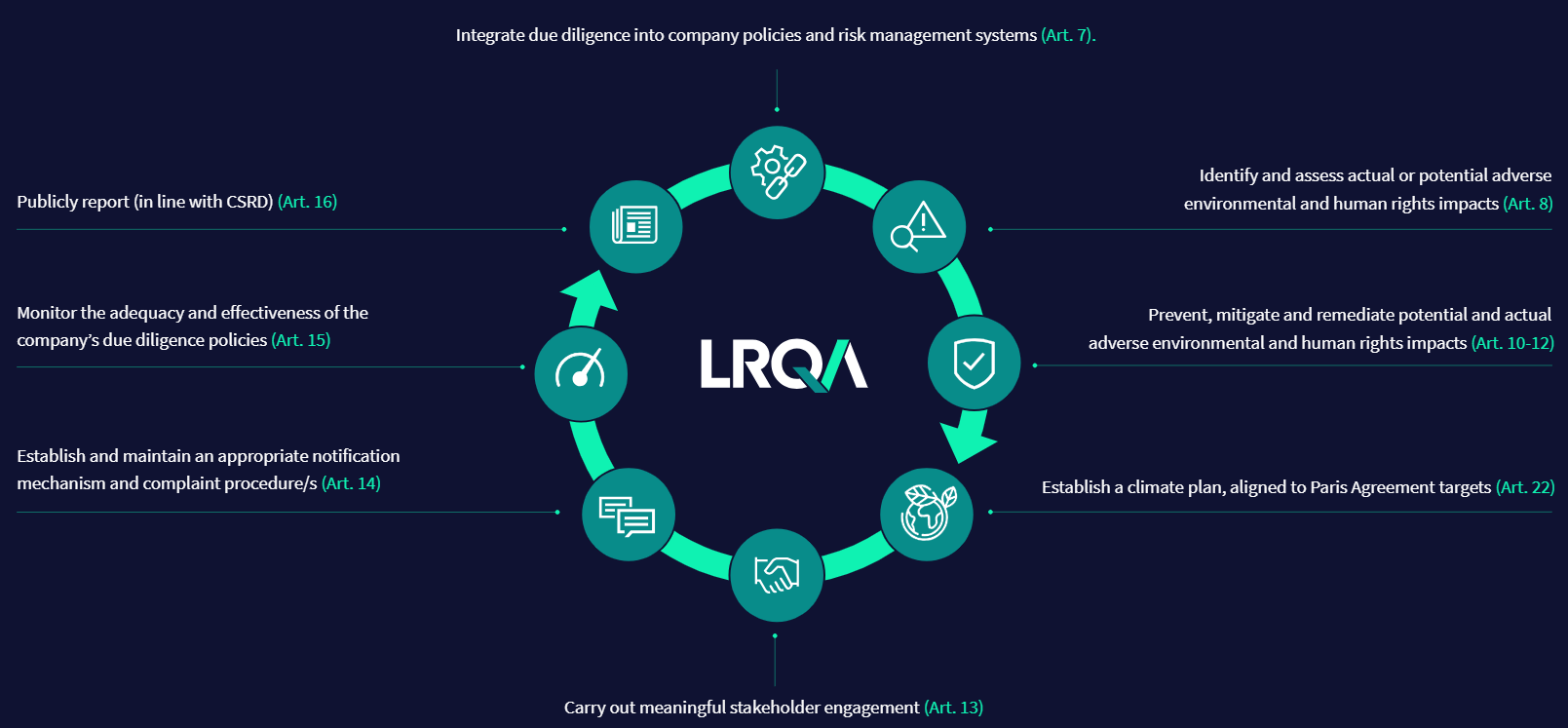
The directive requires companies to:
-
Integrate due diligence into company policies and risk management systems
-
Identify and assess actual or potential adverse environmental and human rights impacts
-
Prevent, mitigate, and remediate potential and actual adverse environmental and human rights impacts
-
Carry out meaningful stakeholder engagement
-
Establish an appropriate notification mechanism and complaint procedure/s
-
Monitor the effectiveness of the company’s due diligence policies
-
Establish a climate plan, aligned to Paris Agreement targets
-
Publicly communicate in accordance with CSRD
How does the CSDDD differ from other ESG regulations?
While other regulations like the Corporate Sustainability Reporting Directive (CSRD) focus on disclosure, the CSDDD requires companies to take concrete actions to prevent and mitigate harm. The directive emphasises accountability, mandating active steps to address risks and setting legal consequences for non-compliance.
How will CSDDD affect supply chain management?
CSDDD requires businesses to assess the entire supply chain for risks, including indirect suppliers. Companies must demonstrate active measures to address human rights and environmental impacts, shifting supply chain management towards greater transparency and proactive engagement with suppliers to uphold sustainable practices.
What is the timeline for the CSDDD?
Compliance begins in 2027, with a phased rollout based on company size.
How can CSDDD compliance enhance business outcomes?
Beyond avoiding penalties, compliance can strengthen stakeholder trust, improve brand reputation and create competitive advantages through responsible and sustainable practices.
How can LRQA help you achieve compliance with the CSDDD?
LRQA helps organisations achieve compliance with the EU Corporate Sustainability Due Diligence Directive (CSDDD) by offering tailored, end-to-end support that addresses every stage of the directive’s requirements. Our approach combines deep ESG (environmental, social, and governance) expertise with practical solutions to empower businesses to meet regulatory obligations effectively. To make an enquiry contact us here.
How we can help
We provide a full suite of solutions to support you with every aspect of ESG due diligence.
-
ESG Advisory Services

Identify and reduce risk in your operations and value chains
ESG Advisory Services -
Sustainability and Responsible Sourcing
Improving your ESG credentials and adopt best practices
Sustainability and Responsible Sourcing -
Data and Analytics

LRQA's supply chain management software EiQ helps you monitor and manage your supply chain ESG risks in real-time
EiQ
Related solutions
Access our resources and find out how we partner with you to navigate evolving corporate sustainability regulations
-
Interactive map

Access
Access our supply chain due diligence interactive map for a breakdown of the most significant laws impacting businesses and help your company stay prepared for any active or upcoming legislation.
Learn more -
Navigating EU CSDDD webinar

Watch
Watch our Navigating EU CSDDD: Key expectations and preparation steps for companies webinar, hear from our CSDDD experts and discover how to prepare and how to leverage existing compliance mechanisms.
Learn more -
CSDDD overview

Read
Read our CSDDD overview and find out how LRQA can support your business to adhere to the EU's Corporate Sustainability Due Diligence Directive’s human rights and environmental requirements.
Learn more -
2024 ESG due diligence guide

Read
Read our 2024 guide to supply chain ESG due diligence requirements developed to help you understand regional regulations, specific compliance requirements and prepare for future changes.
Learn more
Corporate Sustainability Reporting Directive (CSRD)
We provide comprehensive end-to-end support to help organisations meet the requirements of the Corporate Sustainability Reporting Directive (CSRD). Our end-to-end approach supports every stage of your CSRD journey—from understanding new requirements to delivering actionable insights and verified reporting, to closing your performance gaps. Our approach doesn’t only address compliance but also enhances strategic resilience and reputational value, enabling businesses to unlock sustainable growth. Visit our CSRD page to learn more about how we can empower you to meet evolving ESG reporting requirements.
Read
Find out more about CSRD
Why work with us?
With over 800 ESG experts globally, we work alongside you to create solutions that address the unique challenges faced by your business. We have deep expertise in existing and forthcoming ESG legislation and are relied on by some of the world’s most recognisable brands. We partner with you to understand your unique challenges, building a proactive and pragmatic approach to ESG due diligence.
Global capability
Our solutions are delivered by a global team of specialists in ESG, supply chain, cybersecurity and compliance. This experience and reach help us understand the risks and opportunities your business faces today, wherever you operate.

We partner with you
To fully understand the challenges you face and identify the right solutions, we form deep partnerships with our clients that enable us to gain a comprehensive understanding of their business risks and opportunities.
A history of firsts
We were the first to receive accreditation to deliver certification services for a range of quality, environmental, and health and safety standards across the globe. And we continue to be instrumental in developing a variety of ESG-related standards and schemes.

Data-driven insights
We invest in digital platforms that give you deep insight into your operations. Our human intelligence is enhanced by extensive analytics capabilities which can be applied to address current and future risks within your operations and supply chain.