
The Client
Conservation International (CI) is a global environmental nonprofit organisation committed to protecting nature and advancing sustainable development for the benefit of people. Operating in over 30 countries, the organization works with communities, governments, and industry to safeguard critical ecosystems and address climate and biodiversity challenges. Since 1987, Conservation International has leveraged science and partnerships to deliver measurable, long-term conservation outcomes supporting communities’ livelihood.
The Challenge
CI Fiji has been supporting the Fiji Fishing Industry Association – FFIA - in translating international human rights expectations into clear policy guidelines that strengthen compliance across the fishing sector. As an industry association, the FFIA identified the need for a written labour and human rights framework to support ongoing compliance and enhance the industry’s competitiveness by advancing responsible labour practices at sea.
FFIA faced the following challenges:
- Complex regulatory requirements: Fishing companies must navigate international, regional and national regulations, making compliance difficult.
- Limited social policies: Most member companies lack formal policies and procedures to commit to, implement, and remediate human rights risks, creating operational gaps.
- Industry-specific constraints: Conditions at sea – such as isolation and limited access to facilities – makes monitoring and safeguarding human rights particularly challenging.
The Solution
To meet the FFIA’s needs, LRQA supported CI through:
- A desktop landscape review of Fiji’s national regulation frameworks and relevant international standards on social sustainability and fishers’ rights.
- Consultation with key stakeholders, including relevant Fiji government departments, industry associations, and civil society organisations.
- Co-development of a series of Social Policy Guidelines, created in close collaboration with the FFIA.
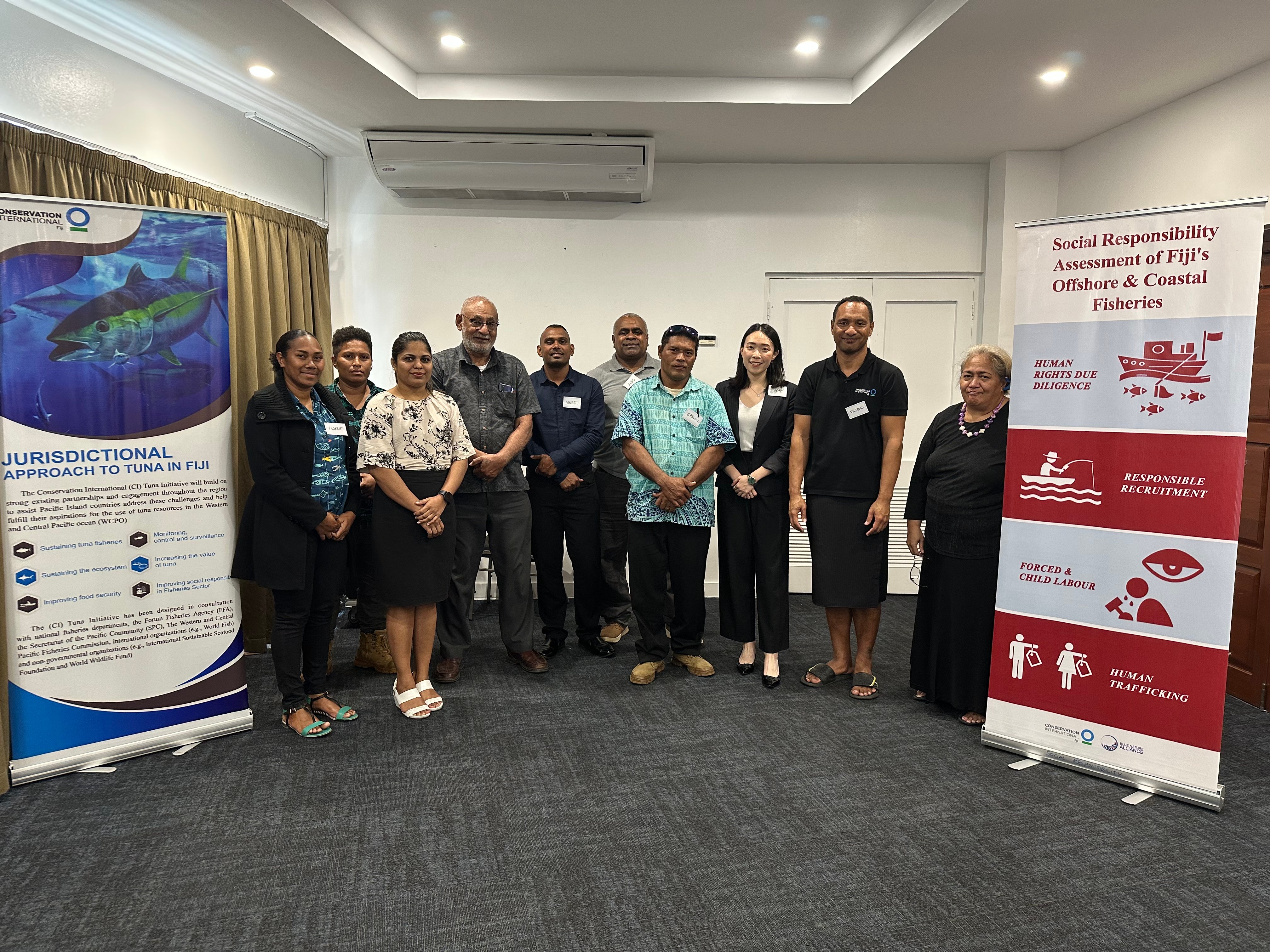
- A validation workshop to present the drafts to the FFIA and other stakeholders, receiving wider stakeholder feedback and securing alignment.
The Patnership
The CI–LRQA partnership combined multi-stakeholder engagement with strong human rights and social assessment expertise. Leveraging LRQA’s technical capabilities and CI Fiji’s trusted relationships with local stakeholders, LRQA and CI co-create practical social sustainability guidance that fishing companies can apply at any stage of developing their human rights approach. The work has gained support from industry and other local civil society organisations.
The Result
The Social Policy Guidelines for the Fiji Fishing Industry Association provides practical guidance on how fishing companies can manage and safeguard human rights in own operations and supply chains. By addressing the industry-specific challenges and aligning with international standards, CI is not only supporting the Fiji domestic fishing industry but also setting a reference point for responsible season practices globally.
Access the policy guidelines
- Child Labour Policy Guidelines
- OHS Policy Guidelines
- FOA Collective Bargaining Policy Guidelines
- Corporate Responsibility Policy Guidelines
- Forced Labour Policy Guidelines
- Employment Contracts Policy Guidelines
Want to know more about our solution?