

Establish an accurate, independently verified Product Carbon Footprint.
An LRQA verified Product Carbon Footprint acts as a management tool to drive cost reduction and establish a clear climate strategy at global level.
iso 14067 product carbon footprint verification
Overview ISO 14067
ISO 14067 specifies the principles, requirements and guidelines for the quantification and reporting of the carbon footprint of a product (PCF), and is consistent with life cycle assessment (LCA) Standards (ISO 14040 and ISO 14044). This Standard contributes to the UN Sustainable Development Goal 13 on Climate Change.
Many customers are looking to use their purchasing choices as a way to help protect the planet from climate change. Forward-thinking businesses are therefore measuring the carbon footprint of their products to enable consumers to make that choice, and at the same time gain a better understanding of their GHG emissions so that they can reduce them. Stakeholders, including investors and staff, are also driving companies to have effective measures in place with respect to ESG (environmental, social and corporate governance) issues, and verified PCF is an important step in reaching that goal.
Benefits of ISO 14067
Stakeholder demand - Both internal and external stakeholders are looking for accurate, transparent information to help them make purchasing decisions about their products. Independently verified product carbon footprints enable stakeholders to assess the robustness and reliability of brand claims.
Competitive advantage – Customers are seeking products with a lower carbon footprint and expect organizations to have measures and plans in place to reduce GHG emissions. In relation to products and services, this journey starts with establishing the carbon footprint, before having it independently verified. By disclosing LRQA verified PCF, companies can gain a competitive advantage, enhancing the reputation of their brand value and driving stronger ESG performance.
Efficiency gain – LRQA verification of PCF can reveal inefficiencies, waste, data gaps, errors or misstatements in a process that identifies cost savings and opportunities for continuous improvement.
Benchmarking – it can be difficult for businesses to differentiate between products according to their carbon footprint, an independent assurance statement increases visibility and gives confidence that data is accurate and reliable.
Risk management – as an important component of ESG, LRQA verified PCF lowers risk, protects business continuity and demonstrates climate resilience.
Contact us to learn more about ISO 14067 Verification
Need help with PCF Verification?
LRQA verification independently verifies your data increase visibility and help inform key decisions. Checking that the product carbon footprint is in accordance to ISO 14067 is critical to increasing the credibility of the footprint and improvements externally.
LRQA verification typically has two stages:
Stage 1 – Initial data review, verification plan and sampling plan.
Stage 2 – Data verification, creation of list of findings. Final Report and Assurance Statement.
Whether your business has a comprehensive but unverified carbon footprint analysis for your product(s), or whether you are just starting out on the journey, get in touch - to ensure that you are able to leverage the value of verified data.
LRQA: Your trusted assurance partner in a changing sustainability landscape.
We’re here to help negotiate a rapidly changing world, by working with you to manage and mitigate the risks you face. From compliance to data-driven supply chain transformation, it’s our job to help you shape the future, rather than letting it shape you.
Technical expertise - the technical knowledge and project management expertise of our globally renowned, experienced and highly trained ESG and sustainability experts ensures that we can adapt our assurance services to your business needs. We bring international expertise and deep insight backed with first class project management and communication skills.
Strategic vision - LRQA is trusted by businesses worldwide to help them transform sustainability and ESG performance. LRQA is a PCF verification partner and one of the longest standing GHG verification providers, recognized by over 45 independent accreditation bodies to provide third-party certification, verification and assurance of climate change and sustainability data. We can provide independent verification and assurance against a range of standards, schemes, and guidelines, including ISO 14064, EU/UK ETS, GRI, and AA1000.
Effective partnership - we have built thousands of enduring client partnerships based on the values we share and our global reputation, industry leadership and sector knowledge. In a rapidly changing sustainability landscape, every business is unique. That’s why our experts work with you, to fully understand your needs and goals; to better understand how we can support them.
We believe our customers need a new kind of partner. A partner that can blend technical expertise and knowledge with data-driven tools to drive change, transform performance, build trust and sustain growth.
Want to know more about this service?
CASE STUDIES
-
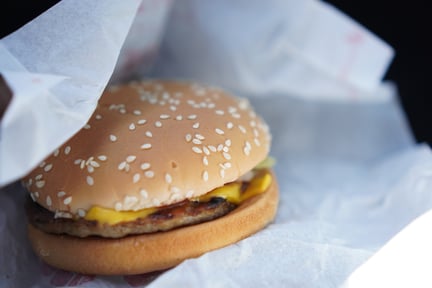
McDonald's and LRQA - turning food safety risk into...
Case Study
For over 25 years, McDonald’s has partnered with LRQA, beginning with supplier audits and evolving into a comprehensive,...
Read more -
Driving confident investment decisions
Case Study
Learn how LRQA helped Goldman Sachs Asset Management (GSAM) portfolio companies to assess risk and build resilience.
Read more -
EHS Achieves ISO 42001 AI Management System Certification with...

Case Study
Emirates Health Services becomes the first to achieve ISO 42001 AI Management System certification with LRQA, emphasizing AI...
Read more -
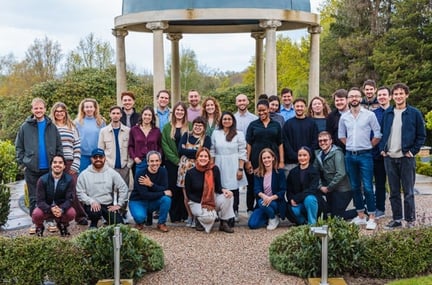
Thrust Carbon ISO 14083 Verification Case study
Case Study
Award-winning green tech start-up, Thrust Carbon, explains what it means to be among the first organizations to have...
Read more -
Trelleborg Marine Engineering - ISO 50001 certification case study

Case Study
Read more on how Trelleborg Marine Engineering (Qingdao) Co Ltd improved energy management and reduced emissions with ISO...
Read more -
Providing SOC cyber security services to a top 10...

Case Study
This client is one of UK’s largest banks, ranking within the top 10 in Europe for market capitalisation,...
Read more -
Otto and Sons and LRQA - Showcasing best practice...

Case Study
LRQA’s Farm First assurance scheme has supported OSI Group’s subsidiary in achieving their goals of enhancing food safety,...
Read more -
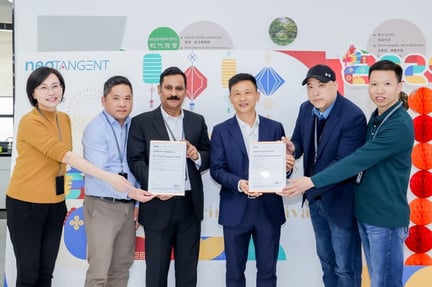
Neo Tangent receives ISO 9001 and ISO 27001 certifications...
Case Study
Neo Tangent Limited, a leading Global Business Services (GBS) company recently achieved a significant milestone of two ISO...
Read more -
Mott MacDonald Carbon footprint case study
Case Study
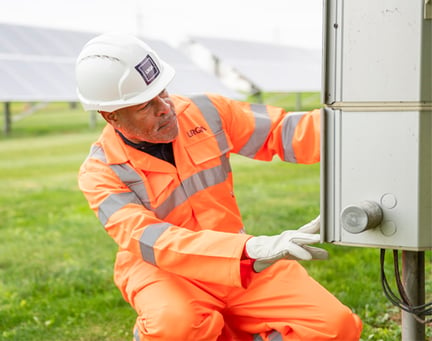
Over eight years ago Mott MacDonald started its verification journey and has been at the forefront of delivering...
Read more
INSIGHTS
-
New data, new standards, new expectations: the state of...

Article
New World Health Organization (WHO) data, a wave of revised food safety standards and a shifting hazard landscape...
Read more -
Five things companies overlook when preparing for CBAM

Article
Discover five common mistakes companies make when preparing for CBAM, from supplier data gaps and carbon cost exposure...
Read more -
Nuclear and energy security in the Middle East

Article
Explore how nuclear energy is reshaping energy security in the Middle East, driven by rising demand, geopolitical pressure...
Read more
EVENTS
-
Building a Modern SOC Webinar

Event
Join LRQA’s Building a Modern SOC webinar on 15 September at 9:30am. Discover how to strengthen security operations,...
Read more -
Webinar: Data, Evidence, and Enforcement: Transforming Seafood Risk Management
Event
Join LRQA and industry experts as we explore what this means for seafood businesses and how organizations can...
Read more -
Webinar: FSSC 22000 Version 7 Key Changes - What...
Event
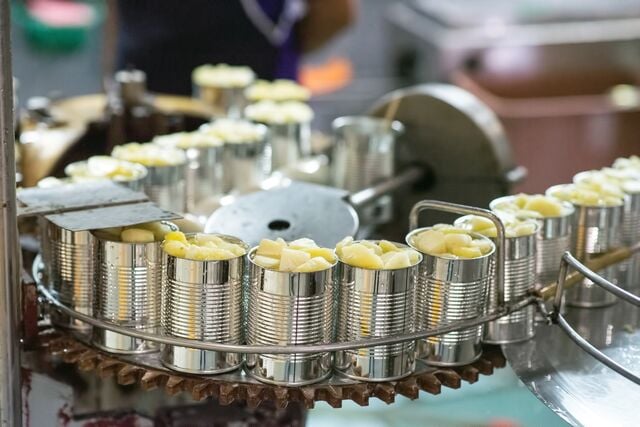
Version 7 introduces significant updates to the Scheme, enabling organizations to enhance their food safety management systems, stay...
Read more